

Super Cowgirl and Mighty Miracle Play Guide
WHAT TO KNOW BEFORE THE SHOW!
PLOT SYNOPSIS
The story begins as Cory is dropped off at her Grandmother Autumn’s home. Cory’s dad can’t take care of her right now after losing his job, plus Cory’s mom has passed away, leaving her feeling heartbroken and alone. Living with Grandmother Autumn is not easy. The two don’t get along and often argue about things like food, church, and rules. Their neighborhood is struggling, too. Many families have been forced out of their homes, and money is tight.

On their way to church one day, Cory and Grandmother Autumn encounter a scruffy stray dog who begins following Cory. Cory wants to keep the dog, but Grandmother Autumn insists they can barely take care of themselves. But the dog keeps reappearing, bringing Cory an assortment of little treasures. At home, Grandmother Autumn deals with her own worries, including losing her job and a letter from the bank that threatens to take away her house. As Cory’s anger and feelings of being misunderstood build, she runs away and gets lost. She’s rescued by her grandmother, and the two slowly soften toward each other. Grandmother Autumn agrees to let Cory keep the dog for now and the three begin figuring things out one day at a time.
As days pass, Cory learns her Papi won’t be coming back. She misses her mom and remembers her songs, butterfly kisses, and cowgirl spirit. Her parents met in the rodeo which she embodies when she becomes Super Cowgirl. Using her imagination, Cory transforms into “Super Cowgirl,” and the dog becomes her sidekick, “Mighty Dog.” Together, they go on playful adventures, even as real-life challenges continue and moments of connection grow stronger. Grandmother Autumn begins to open up about her regrets of not visiting Cory and her family sooner, and Cory promises to try harder. The dog continues collecting items, which eventually become part of a special surprise for Grandmother Autumn around a rose plant that was planted when Cory’s mom was born but hasn’t bloomed in years.
Just when things seem to be improving, trouble strikes. Cory forgets to close the gate, and dangerous dogs rush into the yard. Mighty Dog bravely protects Cory and is badly injured. At the veterinarian’s office, Cory and Grandmother Autumn face a heartbreaking choice: save the dog with money they don’t have or say goodbye. Grandmother Autumn is willing to give up everything, even her wedding ring, to save the dog who saved her granddaughter. When all hope seems lost, they wish for a miracle.
In the end, that miracle comes. The dog survives and becomes a true member of the family, earning the name “Mighty Miracle.” With money from Cory’s dad and their church community, things begin to look up. Cory and Grandmother Autumn grow closer, learning to be honest, loving, and strong together.
PLAY BEFORE THE PLAY
FAMILY, CULTURE, & ME
Super Cowgirl and Mighty Miracle is a story that reflects some of the experiences found in communities impacted by economic hardship, especially experiences surrounding familial bonds and resilience. Invite your students into a conversation about family and culture by having them create a family tree/collage.
Before the big day, ask your students to bring in pictures of their family that they’re willing to cut up and paste. Provide your students with craft supplies like paper, scissors, glue sticks, markers, magazines, etc. and allow them to create a collage of their family. To help guide their creative process, ask your students to consider the following questions:
- What does “family” mean to you?
- Who are the important people in your life? Do you consider any of your friends to be part of your family?
- What is a tradition or activity your family loves to do together?
- What foods, music, or celebrations are special in your home?
- How are families the same? How are they different?
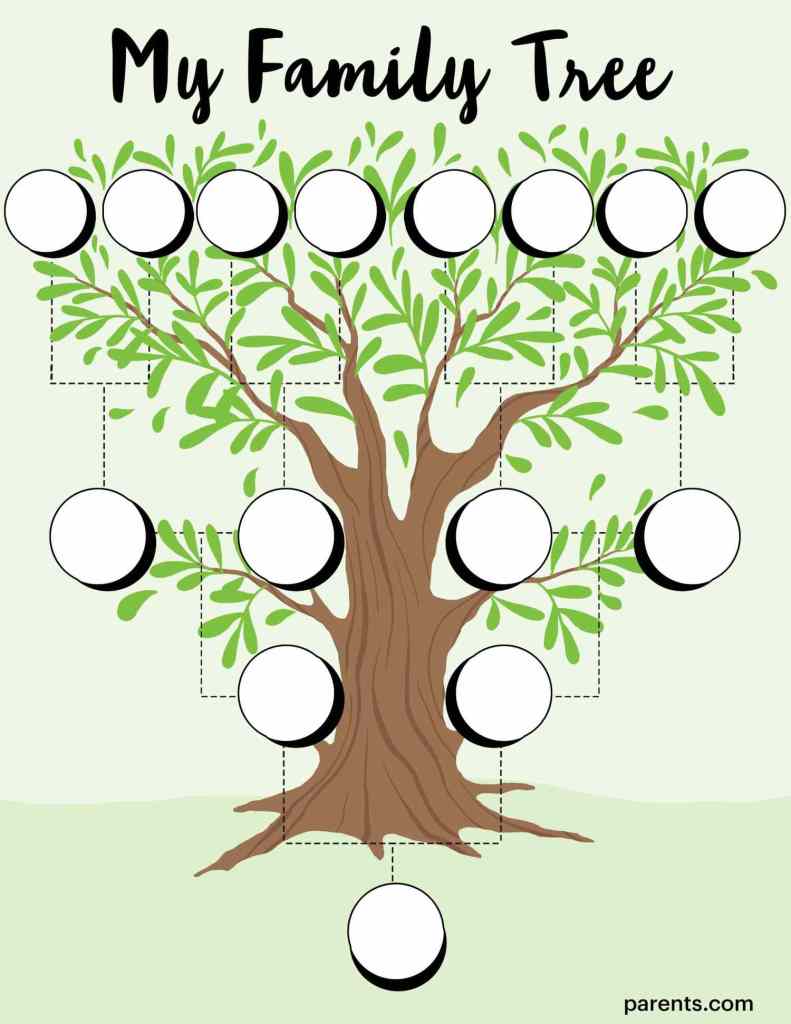
After the collages are complete, have your students share their family projects with one another. Encourage them to share whatever makes them comfortable. Is their family big or small? Do they have siblings or cousins? Do they have a favorite weekend activity or a fun place they love to go on vacation with their family? After everyone has shared, talk with your class about any similarities or differences they may have with their peers’ families. Feel free to share your own family with your class as well.
KAS: VA:Cr1.2.2; C.K.2
POWERED UP PLAYTIME
Lexington Children’s Theatre’s production of Super Cowgirl and Mighty Miracle has a human actor playing the role of Miracle the dog. The actor uses their body and movement to help the audience believe they are a dog during the performance.
Begin this activity by asking your students to explore moving and acting like a dog. Ask your students to consider how different breeds of dogs might move. Are they a big or small dog? Are they lazy or very playful and active? Do they like to sniff around, dig holes, or swim in lakes? What other activities do dogs like to engage in? How do they move if they’re sad, happy, or scared? Then tell your students that they are more than just dogs, they are now superhero dogs. How does being a superhero change how their dog moves and interacts with others?
After exploring their characters with their bodies, give your students the chance to make their superhero disguises. This can be done by providing students with simple art supplies like superhero mask templates, fabric to make capes, crayons, yarn, and other decorative supplies. Encourage your students to think about what kind of powers they would have as a super dog versus a human superhero.
Once their disguises are ready, have each student pair up with a friend. To start, one student in each pair will become their human superhero alter ego while their partner will become their super dog sidekick. Give pairs simple scenarios to act out such as going on a rescue mission, training together, playing fetch, or helping someone in need. Allow time for planning, then invite pairs to perform their short scenes for the class. Then have partners switch roles and try a new scenario to share.
KAS: VA:Cr2.1.1; TH:Cr1.1.K.a
RODEO READY: COW-FOLK CHALLENGE
Create an xciting rodeo obstacle course experience where students show off their best cow-folk skills. Start by setting up your classroom or outdoor space as a “rodeo ring” with four simple challenge stations that students rotate through in small groups:

- Horse Ride: Students “ride” imaginary horses/pool noodles through a winding path of tape lines or cones
- Lasso Practice: Students use a small rope (like a jump rope) to lasso designated targets like cones or stuffed animals
- Strength Training: Students lift and balance simple objects like beanbags or small boxes and carry them carefully to a marked area
- Sidekick Rescue: Students complete a short rodeo-style challenge by first spinning around a bat 10 times then carefully moving through 3 hula hoops, completing 15 jumping jacks, then finally racing to “rescue” a stuffed animal and bringing it safely back to the rodeo ring
After completing all four stations, bring students back together for a final rodeo celebration circle where each student can enter the “rodeo ring” to show off a special skill they have (like a fun dance move or silly joke) as the class cheers them on.
Extend the Experience: Have a discussion with your students about heroism. Consider asking them the following questions to help guide the conversation:
- What does it mean to be a hero?
- Can heroes be small, young, or quiet? Why or why not?
- What brave or challenge thing did you have to do during the obstacle course?
- How did you help or encourage others during the activity? Can encouraging others be a form of heroism?
- How does it make you feel when you help others?
- Where do you see heroes in your own life and/or family?
KAS: 1.2.1; 2.2.1; 3.2.2
CONTEXTUAL ARTICLE
GLOBAL IMPACTS: THE GREAT RECESSION
From the late 2000s until the early 2010s, the worldwide economy slowed, causing major financial issues across the globe. This period led to many problems for families: they owed a lot of money, were paid low wages, and many lost their jobs. A “recession” occurs when an economy stops growing and even begins to shrink. In the late 2000s, this particular event was called the Great Recession due to its severity and widespread global impact.
The Great Recession had many causes, but one of the larger problems was the housing market. In places like the United States, housing prices had increased significantly in a short time. Citizens had to borrow significantly more money to buy homes. When those housing prices finally began to decline, people found themselves owing much more money than their homes were worth. As a result, people were unable to repay their loans, leading to financial troubles for both citizens and banks. Since people couldn’t repay their loans, the banks began to lose money because they had bought and sold complex financial products tied to those loans.

Around the world, people suffered during the Great Recession. One major consequence was job losses. Businesses had no money, so they couldn’t pay their workers, which forced them to let go of employees. This led to high levels of unemployment because many could not find work. Furthermore, due to unemployment and low wages, households struggled with debt—such as mortgages, credit cards, and car loans—they couldn’t pay.
The Great Recession created worldwide economic damage. In response, California playwright José Cruz González wrote the play Super Cowgirl and the Mighty Miracle. The story follows a young girl named Cory who has to move in with her very stern grandmother when her father is forced to go away for work. The plot addresses real-world topics like family conflict and poverty in a way that young audiences can understand. Gonzalez stated that he wanted to explore the real-life struggles of families losing their homes and communities changing. As González notes, “People were losing their homes and neighborhoods were changing, and I wanted to look at that and tell a story about what was happening to families during that time.”
Through the eyes of an imaginative child, the play brings this difficult financial crisis to the stage for both audiences to enjoy and learn from.
HOW TO GROW AFTER THE SHOW!
EXTEND THE EXPERIENCE
CULTURE JARS
The play’s main character, Cory, is “Afro-Latina,” meaning she is a Latina of mixed race with African ancestry. Afro-Latino history and culture are very rich and expand across the Americas.
This Cultural Jar activity encourages students to explore and celebrate their unique cultural backgrounds, just like Cory does in Super Cowgirl and the Mighty Miracle! Start by gathering your students and explaining that a “culture,” in simplest terms, is what a group of people have in common. Explain that they might speak the same language, wear similar clothes, listen to the same music, eat the same foods, or celebrate traditions specific to their culture. They might also share similar beliefs. Culture is often passed from generation to generation by communication and imitation so the youngest generation can learn from older generations and keep passing their culture on.

Once your students understand what “culture” is, print this simple blank jar template and hand one to each student. Instruct them to fill it with drawings representing their culture. These might include their favorite foods, celebrations, languages spoken at home, flags, special memories, or meaningful traditions. When they have completed filling their jar, have them cut it out. Collect all the jars from the class and display them on a 2D “shelf.” While each jar will tell a personal story, together on the shelf, it will highlight the diversity within their classroom community.
Promote a conversation among students and encourage them to become curious about those around them in a respectful manner. Have students inquire about the items in the jars and ask questions to gain insight into the many traditions that make their classroom unique. If you find that students are hesitant to ask questions, you can guide them with the following questions:
- What are some things you see in other jars that you can relate to in your culture?
- What are some things that differ from your culture?
- What holidays do you celebrate?
- What are some of your favorite foods around the holidays?
- What kind of music do you listen to?
KAS: K.G.HI.1;1.I.Q.2
JUMPING BEANS!
In Super Cowgirl and the Mighty Miracle, Cory and Bandit play a game called “Jumping Bean!” where they jump, spin, and fall. In Mexico, jumping beans (also known as frijoles saltarines in Spanish) are sold as toys. In reality, they are seed pods that have been inhabited by the larvae of a small moth known as Cydia Saltitans. These have been entertaining children for decades. In this activity, students will make their own “jumping beans” and explore gravity using the scientific method.
Materials Needed for Jumping Beans:
- Marbles
- Tin Foil
- Blank paper and pencil
- Cardboard Box
- Scissors or box cutter
- Books
- Tape
Gather your students and explain that you will be learning about the scientific method and exploring how gravity interacts with the Earth. Explain that gravity is the force that pulls everything down to Earth. For example, when you jump up, gravity is what brings you back down to the ground. Then inform your students that the first step in the scientific method is creating a question.
- Creating a Question: Ask your students to think about what they’ll be exploring in this activity and what questions we are trying to answer with this experiment. Then have them write their question on a blank piece of paper. For this activity, their question might be “What happens when a marble inside a “bean” starts rolling down a ramp?”
- Hypothesis: The next step is to formulate a hypothesis or an educated guess about what might happen. Ask your class what they expect to happen, given what they already know. Remind them that, as you discussed earlier, gravity is the force that pulls everything toward the Earth. Have them write their hypothesis on their paper.
- Procedure: Now establish the experimental procedure. Have your students document everything done during the experiment so it can be repeated later if needed.
- Results: Once the experiment is completed, have your students write down what happened/what they observed.
- Conclusions: Ask your students what they know now. Was their hypothesis correct? Ask students to write a summary of the experiment and what they would do differently if they were to repeat it.

Prepare for the experiment:
- Cut open a cardboard box and remove the flaps. This will create a long rectangular track for your jumping beans to roll down.
- Create a ramp by stacking books to your desired height, then rest the piece of cardboard on the stack of books and the floor.
- Secure the top edge of the ramp with tape. You’ll now be able to roll the jumping beans down the incline to test your hypothesis.
Creating the Jumping Bean:
- Begin with the short side of the foil facing you and place the marble on it.
- Roll the foil around the marble to create a tube shape.
- Pinch and fold the ends of the foil to seal, with the marble still inside.
- Place the foil-wrapped marble or the “bean” inside a container and shake until the edges are rounded and smooth.
- Take out the bean, place it on an incline, and watch as it jumps down!
Allow each student a chance to roll their jumping bean down the ramp. Once all students have had a turn, return to the hypotheses they wrote down. What did they observe? Were they correct? Is there anything they would change about how the experiment was conducted? Once you’ve had this discussion, reveal to your students that gravity causes the marble to roll inside the foil. When the marble hits the walls of the “bean,” it causes the bean to flip over, which makes it appear to be jumping!
KAS: 3-PS2-1.;2-PS1-1
CAMPBELL’S CANNED CORRAL

Begin by gathering your students and explain the history of the lasso. A lasso is a unique tool that allows cowboys to wrangle cattle while riding their horses. Originally, this ancient roping technique was developed by Spanish cowboys before becoming popular in the American West. With this information, ask your students what they think they could catch with a lasso. Explain that cowboys sometimes used lassos to capture large animals like cows and horses.
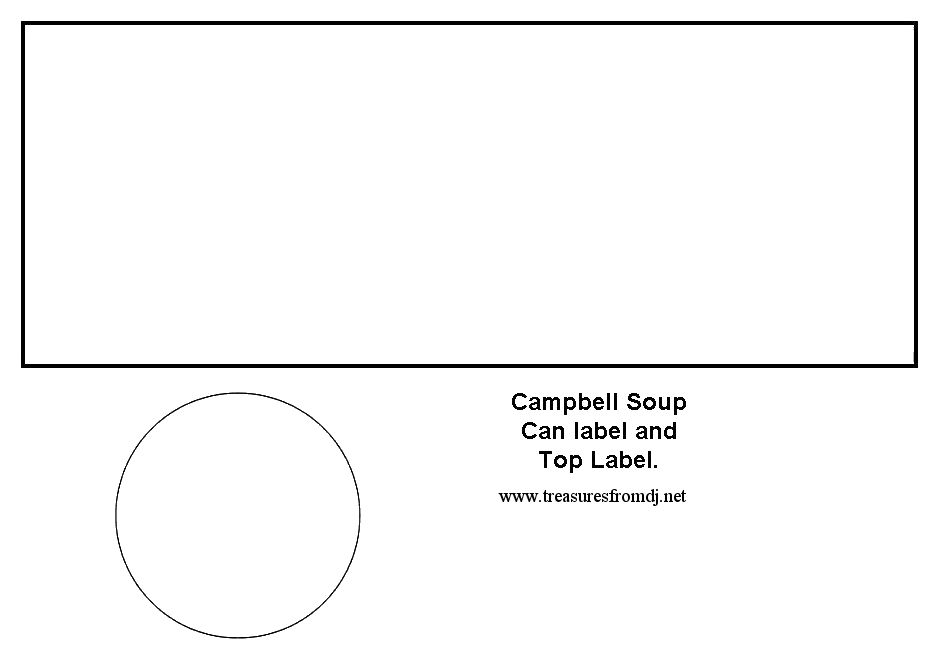
Explain that in today’s lesson, they will become cow-folk by creating their own lassos and pretending to be in the Wild West. Allow students time to create and decorate their soup can labels and lassos.
Materials Needed for Campbell’s Canned Corral:
- Campbell’s Soup Can Label Template
- Empty Campbell Soup Cans (One per student)
- Hot Glue
- Hot Glue Gun
- Coloring Materials
- Paper Plate
- Yarn
- Scissors
Instructions for Creating Paper Plate Lasso:
- Cut out the center of the paper plate.
- Tie yarn to one side of the paper plate.
- Have students decorate their lasso.
Instructions for Creating Campbell’s Soup Can:
- Print out the soup label template (linked under Materials).
- Have students design and color the soup can label then cut it out with scissors. Attach the label to an empty soup can using hot glue.
Once they are finished, allow each student to place their finished soup cans around the room with enough distance from one another to use their lassos which will be props used in the next part of the activity. Gather your students and have them find a space in the room where they can comfortably move in place without bumping into their classmates. Next, read the brief story below to your students. Remember to leave time between sentences for students to explore the actions of the story with their lassos, soup cans, and bodies. Once you make it through this story, feel free to add to it or create your own!
Imagine you are a cowboy/cowgirl, sleeping in your cot in your cabin. The sun rises over the dusty, wild west. You yawn, stretch, and hop out of bed. You put on your finest boots and your very big cowboy hat on top of your head. You make sure to grab your lasso because today is going to be a big day. You walk over to the creaky wooden door and push it open. The sun is very bright, so you cover your eyes. Off in the distance, you see the most beautiful horse! You pick up your lasso and twirl it in a big circle before tossing it as far as you can without letting it go. With perfect aim, you lasso the horse! You begin to pull, but wow, this horse is very, very heavy! You pull and pull with all of your might until you are close to the horse. You give it a gentle pat and reach into your bag to grab an apple. You feed the horse the apple, and it is very happy. You hop onto the horse when all of a sudden there is a big growl! You pat your belly and think about what you are going to have for lunch. You and your new horse will have to find something mighty tasty to eat. You ride your horse into a nearby town, and that’s when you find their saloon! You park your horse and tie it to the nearby post. You do your best cowboy strut into the dusty saloon. Once inside, you spot the most delicious can of soup high up on the shelf. You pat your belly and grin. You grab your lasso, and with a whoosh, whoosh, you make your first toss…and miss. Never defeated, you try again and again until you carefully wrap your lasso around the best can of soup the wild west has ever seen. You slowly, carefully, not to spill the yummy soup, pull the soup can to you. You pick it up and celebrate with a loud “yeehaw!” You exit the saloon, hop back onto your horse, and ride off into the distance–knowing you are about to have a delicious lunch!
KAS: TH: Cn11.1.2; TH: Re9.1.2.b
CHICKEN SOUP WORD SEARCH!
Use the link below and print this fun Super Cowgirl and Mighty Miracle-themed word search for your students!
KAS: RF.K.1.b; RF.2.3
SUGGESTED READING
If you like stories about imagination, family, and walking in the shoes of others, you might also like…
Last Stop on Market Street by Matt de la Peña
CJ and his grandma ride the bus through the city, and along the way, he learns to see beauty in everyday people and places.


Because of Winn-Dixie by Kate DiCamillo
When Opal finds a scruffy stray dog, her whole world changes as she makes new friends and builds a community.
Those Shoes by Maribeth Boelts
Jeremy wants a pair of cool shoes just like everyone else. Instead, he learns an
important lesson about needs, wants, and generosity.


Thank You, Omu! by Oge Mora
Omu makes a delicious stew and shares it with her whole neighborhood, even when it means giving everything away.
You must be logged in to post a comment.