


Mister E of Imagination: Tales of Edgar Allen Poe Play Guide
WHAT TO KNOW BEFORE THE SHOW!
PLOT SYNOPSIS
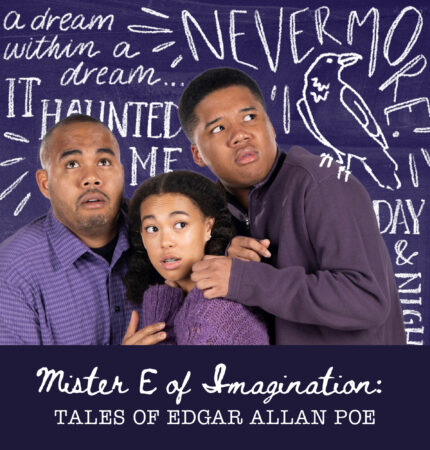
Lexington Children’s Theatre’s production of the Tales of Edgar Allan Poe begins with Poe in distress. Two people notice him and how extremely ill he is and help him to a hospital. Poe is very confused and is drifting in and out of consciousness. During his illness, he revisits several of his famous stories and finds that they represent his past struggles with relationships and other peaks and valleys of his life. The stories included in this production are:
Tell Tale Heart
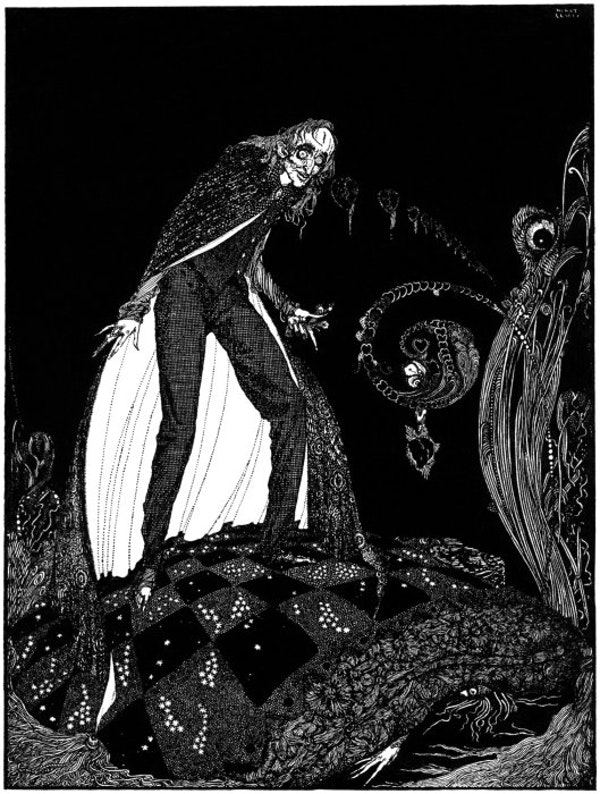
A man is in complete distress over his landlord’s one dead eye so he decides to kill him and hide him under the floorboards. The police come looking for the landlord and the man starts to hear the landlord’s heartbeat. The sound becomes so overwhelming that he takes the heart out of the hidden corpse just to prove that the heart was beating.
The Fall of the House of Usher
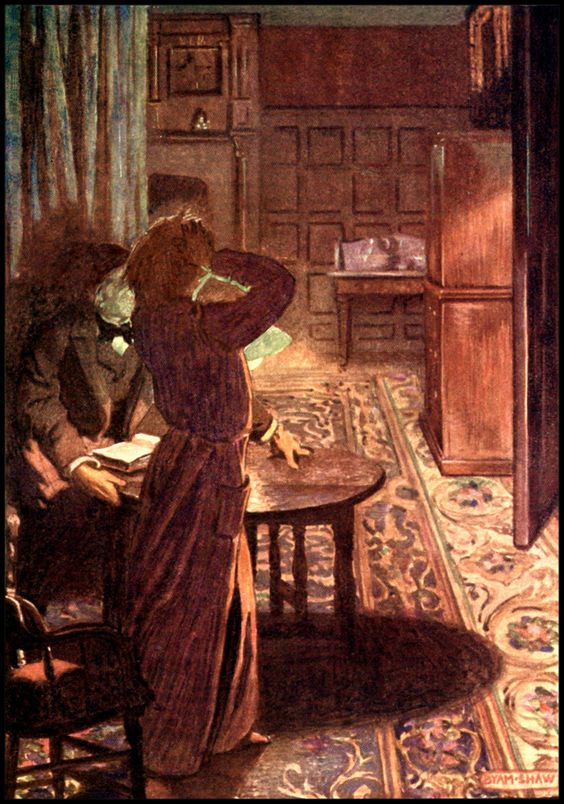
A man is summoned to go live in a mansion with his childhood friend who is very ill. While living in the mansion, he witnesses his friends sister die. Unexpectedly, the sister comes back to life and kills her brother, causing the man to flee from the house.
The Cask of Amontillado
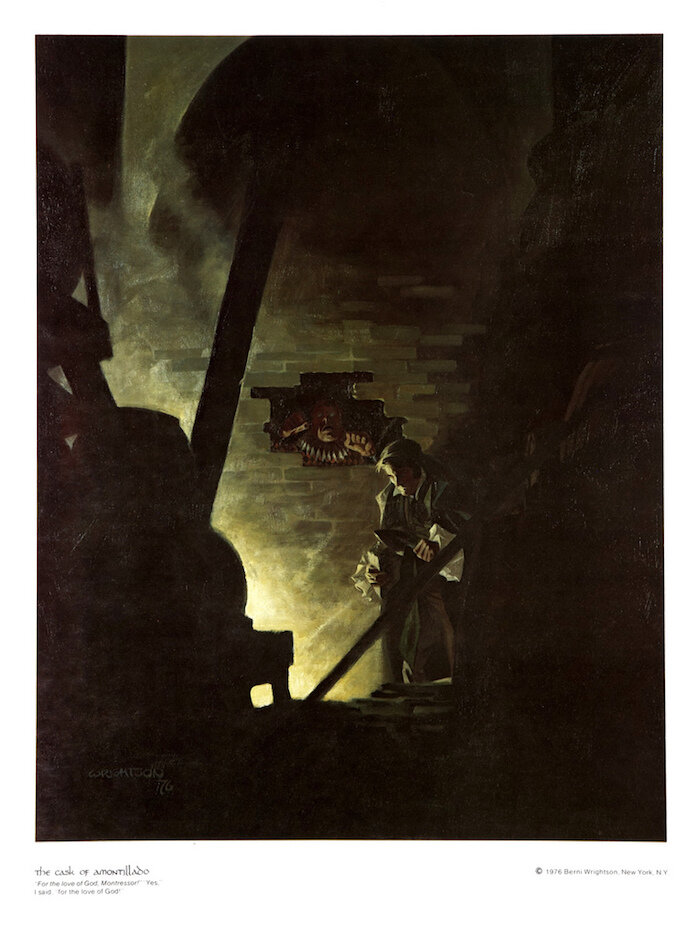
A very wealthy man runs into someone who has wronged him in the past. After realizing who it was, the man seeks revenge by getting his old “friend” intoxicated and takes him down into an old crypt to kill him. In the crypt, the man psychologically tortures him by closing him in behind bricks until a wall is fully made.
The Raven
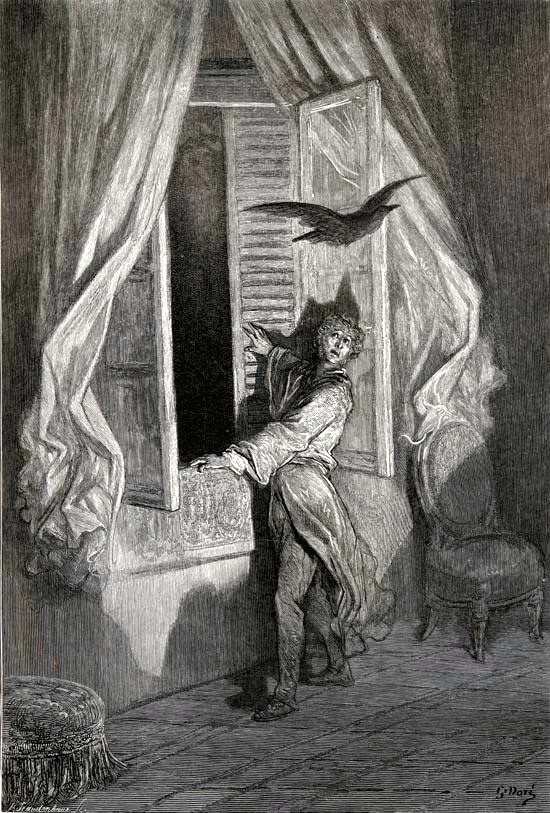
A man sulks over his wife’s death. A talking bird comes into his room and starts to scare him. No matter what the man says to it the raven will only reply with the word “Nevermore,” until it finally drives him insane, if he already wasn’t.
PLAY BEFORE THE PLAY
WHAT’S THAT SOUND: ONOMATOPOEIA
Onomatopoeia is the imitation of natural sounds in word form. These words help us form mental pictures about the things, people, or places that are described.
Poe has examples of onomatopoeia in many of his works. In The Raven, Poe uses it for “tapping”, “croaking,” etc. He uses these words to simulate the sounds that the man is hearing, this helps create the slow slipping into insanity that the man is experiencing. You can slowly sense the buildup of the sound as it repeats throughout the poem.
Sample Onomatopoeia Words: bang, bump, clang, clatter, crackle, crash, drip, gurgle, knock, moan, rustle, screech, squawk, swoosh, tick-tock, thud, whimper, whisper
Have your students get in a circle, first player says a word using onomatopoeia, such as “pop” and points at another player, that player must then repeat the word while doing a motion to illustrate or imitate it. Each player has three seconds to think before they are supposed to act out what the sound is. Once done imitating, they must point at another player and say another word. When a player points and says a word, they must say “onomatopoeia, onomatopoeia, onomatopoeia” before the other player does the imitation. If you cannot come up with either onomatopoeia or an action for the other person’s in time, then you must sit down and wait for the next round.
KAS: RF.3.3; L.3.3
THE RAVEN REVISITED
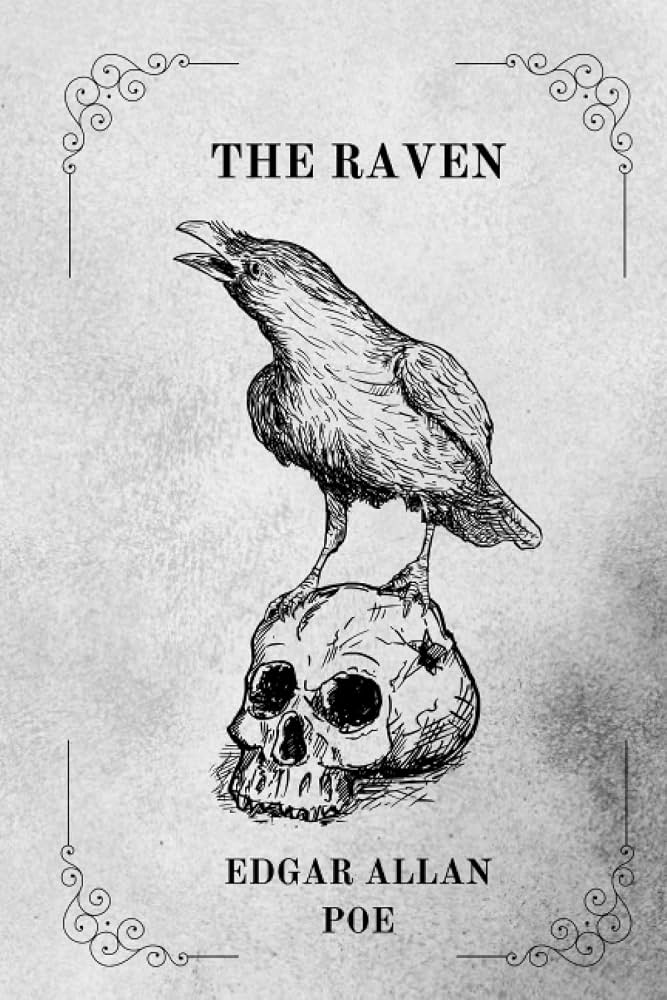
In The Raven, the driving symbol is the dark and mysterious nature of the raven. Ravens are traditionally seen as either wise beings or heralds of doom (like when we say someone has gone “stark-raven mad”). Their dark color (where we get the expression “raven-haired”) and solitary call make us all think of spooky settings. What would have happened if Poe had chosen another symbol? How would it have changed the nature of the piece? How would it change it the story went…
THE RAVEN MERMAID
Open here I flung the shutter, when, with many a flirt and flutter,
In there swam a stately Mermaid of the saintly days of yore.
Not the least obeisance made she; not an instant stopped or stayed she;
But, with mien of lord or lady, flopped above my chamber door –
Laid upon a bust of Pallas just above my chamber door –
Laid, and sat, and nothing more.
Then this fishy woman beguiling my sad fancy into smiling,
By the happy and joyous decorum of the countenance it wore,
“Though thy fins be wet and slimy, thou,” I said, “art sure no craven,
Smiling sweet and gentle Mermaid wandering from the Nightly shore –
Tell me what thy lordly name is on the Night’s Plutonian shore!”
Quoth the Mermaid, “Like, for sure!”
Now try your hand at the following symbols. See if your version of Poe’s The Raven is funnier, more mysterious, or just plain weird.
- Butterfly
- Sheep
- Vampire Bat
- Alien
KAS: RL.5.4; RL.4.4
POE-CABULARY
Click the link below and print off the worksheet so each of your students can explore the unusual vocabulary from the works of Edgar Allan Poe.
KAS: RL.4.4; RF.5.3; RF.5.4c
CONTEXTUAL ARTICLE
Lifting the Veil on Edgar Allan Poe
“Literature is the most noble of professions. In fact, it is about the only one fit for a man. For my own part, there is no seducing me from the path.” –from a letter by Edgar Allan Poe
Edgar Allan Poe was born January 19, 1809 in Boston, where his mother had been employed as an actress. Elizabeth Arnold Poe died in Richmond on December 8, 1811, and Edgar was taken into the family of John Allan, a member of the firm of Ellis and Allan, tobacco-merchants. After attending schools in England and Richmond, young Poe registered at the University of Virginia on February 14, 1826. When Mr. Allan refused to let him return to the University, a quarrel ensued, and Poe was driven from the Allan home without money. He later went to Boston where he published a little volume of poetry, Tamerlane and Other Poems; a rare book now worth $200,000 per copy.
In Boston during May of 1827, Poe enlisted in the United States Army as a private using the name Edgar A. Perry. After two years of service he was discharged and went to Baltimore. With the December issue of 1835, Poe began editing the Southern Literary Messenger. Around this time, Poe married his young cousin, Virginia Clemm (who was only thirteen at the time).
In April, 1844, with barely car fare for his family of three (including his aunt and Virginia’s mother, who lived with them) Poe went to New York where he found work on the New York Evening Mirror. However, a year later, Poe became famous with the spectacular success of his poem “The Raven.”
The years following 1846 were tragic ones. His work on the Broadway Journal failed, and Virginia became very ill and died on January 30, 1847. After his wife’s death, Poe drank more often in despair. Even the slightest bit of alcohol would send him into unpredictable mood swings. Throughout his life, his alcoholism had interfered with his success as an editor, and had given him a reputation for lacking self-control and using poor judgment that he scarcely deserved.
The circumstances of Poe’s death remain a mystery. He was found in Baltimore in a wretched condition and taken unconscious to a hospital where he died on Sunday, October 7, 1849. He was buried in the yard of Westminster Presbyterian Church in Baltimore, Maryland.
To learn more about Edgar Allan Poe and his works, visit the Poe Museum’s website.
HOW TO GROW AFTER THE SHOW!
EXTEND THE EXPERIENCE
AUTEUR THEORY
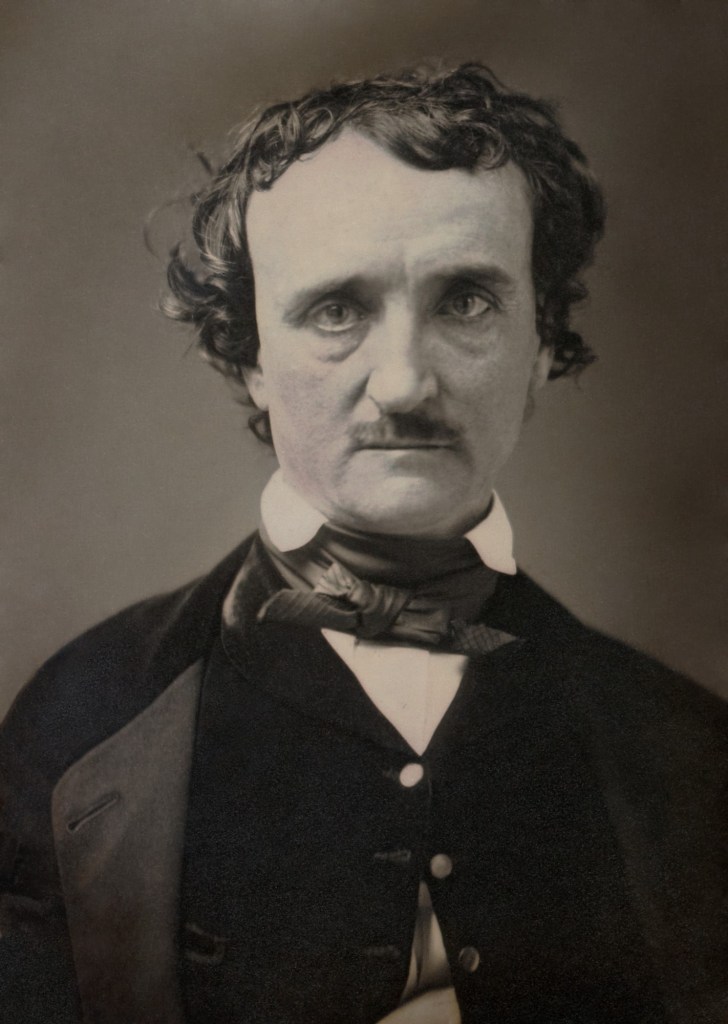
The Tales of Edgar Allan Poe are based off literature Poe wrote in his lifetime. One way of understanding the nature of a work is to understand the world of the author. By looking at Poe’s life and the social history at the time, one can perhaps better understand the motivations behind writing such dark and macabre tales. This method of analysis is called “Auteur Theory” (auteur [pronounced oh-tour] is the French word for author).
QUESTIONS:
- Can you apply auteur theory to one of the tales you saw on stage?
- How could the events in Edgar Allan Poe’s life bring him to write such a dark tale?
- What major themes occur both in Poe’s life and the lives of the character onstage?
For this activity, host an academic forum. Have your students use the above questions to prepare a brief paragraph stating their ideas like an academic abstract. Then, using haughty accents and grandiloquent words, allow the students to present their ideas to the class and possibly open their thoughts up to debate.
Art by Matthew Childers
KAS: L.4.3; TH:Cn10.1.5
CREATE A CASK OF AMONTILLADO

In The Cask of Amontillado, you saw how Montressor lured his rival Fortunato to his doom by the promise of a rare and valuable drink. Although you may not find such a fine wine tempting, there are certainly other items that would certainly tempt you into doing something unexpected.
Ask your students what they think would be alluring to their classmates? Candy? Sports equipment? Video Games? Clothes?
Ask your students to create whatever they think would be desirable to the class by using pictures, paper, markers, whatever! Then have them try to persuade their peers that they have indeed created something rare and worthy of their attention. Tell your students that their goal is to make everyone else want what they have! Set the class up like a carnival of goods and sell away. Warning: don’t bury anyone alive in the process!
KAS: TH:Pr6.1.4; VA:Cr1.2.3; VA:Cr3.1.5
WORLD BUILDERS: AN OPEN DISCUSSION
The Tales of Edgar Allan Poe is a play filled with mystery and intrigue. Using the theatre terms and their definitions below, ask your students to discuss how the playwright, director, and designers of the show were able to incorporate elements of suspense into the play. Ask them to give examples and identify which production elements they believe showed the theme, mood, and/or style of Poe’s work.
Theatre Vocabulary
- Costume: any clothing an actor wears onstage for a performance
- Design Team: those who design and coordinate a production’s set, props, lighting, sound, costumes, and makeup
- Director: the person who oversees the entire process of staging a production
- Lighting Designer: the person who develops a lighting concept and design for a production and also oversees installation and operation of lighting for the show
- Makeup: cosmetics and hairstyling that an actor uses to emphasize facial features, add age, and/or other special qualities called for by a character
- Plot: the sequence of events and structure of a play, including the exposition, inciting incident, rising action, climax, falling action, and denouement
- Scenery: onstage decoration to help establish the time and place of a play
- Sound Designer: the person who determines the kinds of sound effects and musical underscore needed to set the mood of a production and help tell the story
- Theme: the underlying meaning of a work
- Tragedy: a play that ends in defeat or death of the main character; it is based on a serious theme or conflict.
KAS: RL.4.5; RL.4.7; TH:Re7.1.4; TH:Re8.1.5.b
SUGGESTED READING
If you like dark, brooding tales of mystery and suspense, you might also like…
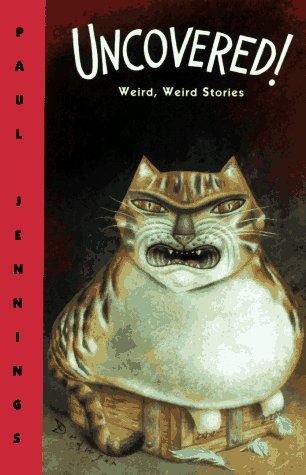
Uncovered!: Weird, Weird Stories by Paul Jennings
This collection of nine tales contains a satisfying blend of humor, drama and quirkiness in which the characters must discover the resolution to a dilemma by bizarre twists of fate or the supernatural.
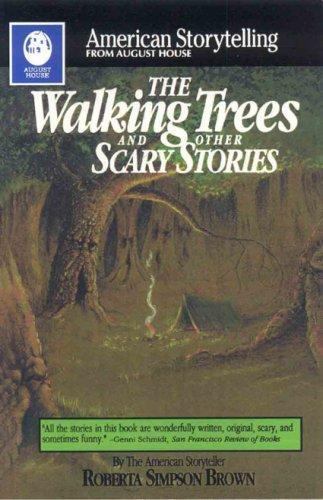
The Walking Trees and other Scary Stories by Roberta Simpson Brown
Short and creepy, these stories are perfect for reading aloud on crisp fall evenings. Or telling around a campfire. Or reading alone in an isolated old house on a rainy night…well, maybe not.
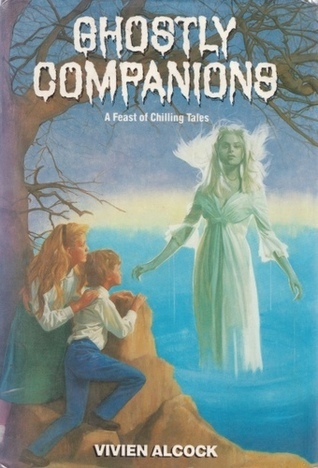
Ghostly Companions: A Feast of Chilling Tales by Vivian Alcock
In these ten stories young people attempt to deal with or to overcome ghostly companions and readers will be well-spooked by the strange events in this anthology of wonderfully eerie stories.
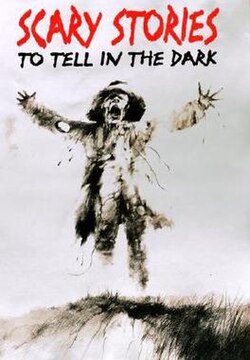
Scary Stories to Tell in the Dark by Alvin Schwartz
Welcome to the macabre world of Scary Stories. Inside, you’ll find alarming tales of horror, dark revenge, and the supernatural.
You must be logged in to post a comment.